The two Australian Standards you'll hear about
AS 4349.3-2010, Inspection of buildings, Part 3: Timber pest inspections, is the standard for timber pest inspections, including the pre-purchase inspections buyers order. The pest industry association AEPMA advises asking for an inspection to AS 4349.3 when you're buying, and says it covers termites, wood borers and fungal decay.
AS 3660.2:2017, Termite management, Part 2: In and around existing buildings and structures, covers termite management for buildings that are already standing, including inspections and treatment of existing homes.
Ask the inspector which standard their report follows.
Before the inspector arrives
- Clear access to the roof space hatch, subfloor, meter box, garage and storerooms.
- Move stored items away from walls where you can, and unlock sheds and gates.
- Tell the inspector about any past termite activity, treatment or barrier paperwork.
- Note any leaks, damp areas or soft timber you've noticed.
AEPMA's code of practice says the inspector needs a roof access hatch of at least 45 cm by 40 cm to enter a roof void, and reasonable clearance under a raised floor. Areas that can't be safely reached are noted as not inspected.
What happens on the day
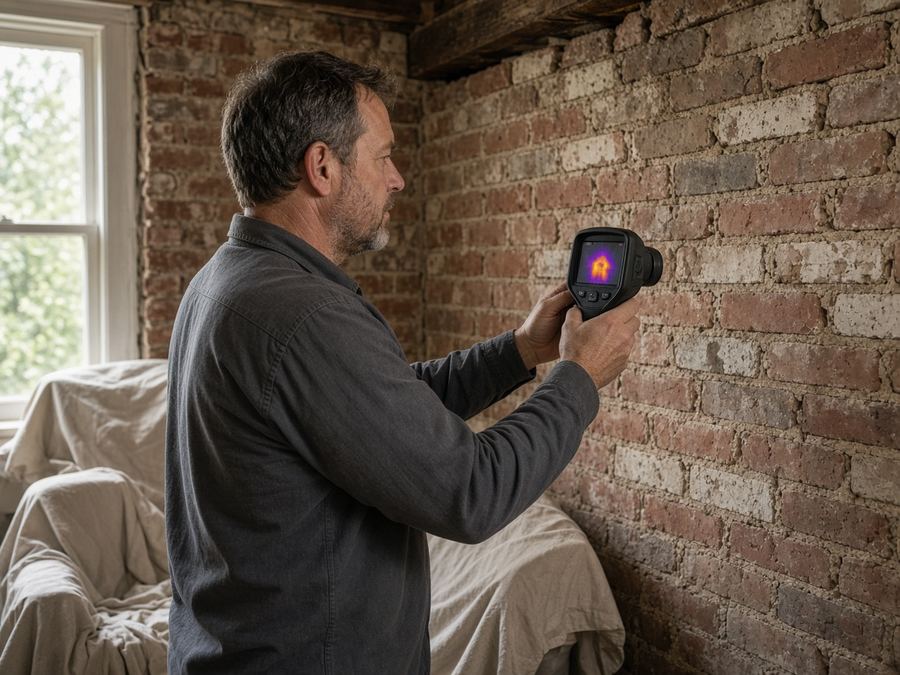
AEPMA's code describes an inspection that usually starts outside, noting the lie of the land and any extensions, then moves through the subfloor, the interior and the roof void. The inspector checks accessible timber visually and may tap (sound) and probe suspect timber, and uses a moisture meter to find damp areas. Thermal cameras and movement detectors are optional extra tools that some inspectors use.
What the report covers, and its limits
Expect a written report noting any live termites, past damage, other timber pests and decay, the areas inspected and not inspected, and conducive conditions: things that make attack more likely, such as leaks, gardens or soil against walls, firewood or timber touching the ground, poor subfloor ventilation and high ground levels.
A standard inspection is visual and non-invasive, so it can't guarantee a property is free of termites, particularly behind walls or under floor coverings. AEPMA's code says a standard pre-purchase inspection doesn't cover drywood termites unless extra work is agreed in advance.
Buying a home
The NSW Government says a building inspection report generally won't tell you whether termites are present, so you should also get a pest inspection, especially in areas where termites are a known problem. If you sign a contract, NSW residential sales usually have a 5 business day cooling-off period, which is the window many buyers use for inspections.
How often to inspect
CSIRO recommends regular termite inspections, at least once a year, because barriers and treatments can be affected by renovations, garden changes and time.
Get a quote
Choose "Termites: inspection" or "Pre-purchase timber pest inspection" in the quote form. We pass it to one licensed local pest management operator, who quotes for the inspection. It's free and there's no obligation.
Where this information comes from
- Standards Australia store: AS 4349.3-2010 Inspection of buildings, Part 3: Timber pest inspections
- Standards Australia store: AS 3660.2:2017 Termite management, Part 2: In and around existing buildings and structures
- AEPMA: Code of Practice for prior-to-purchase timber pest inspections, V3.0 (PDF)
- CSIRO: Managing termites (Building Technology Resources, PDF)
- NSW Government: pre-purchase inspection reports when buying a home
Licensing rules and government advice change. Check with the regulator before you rely on them.